
Chat Commerce Is Killing Your Checkout Flow (And It’s Already Happening)
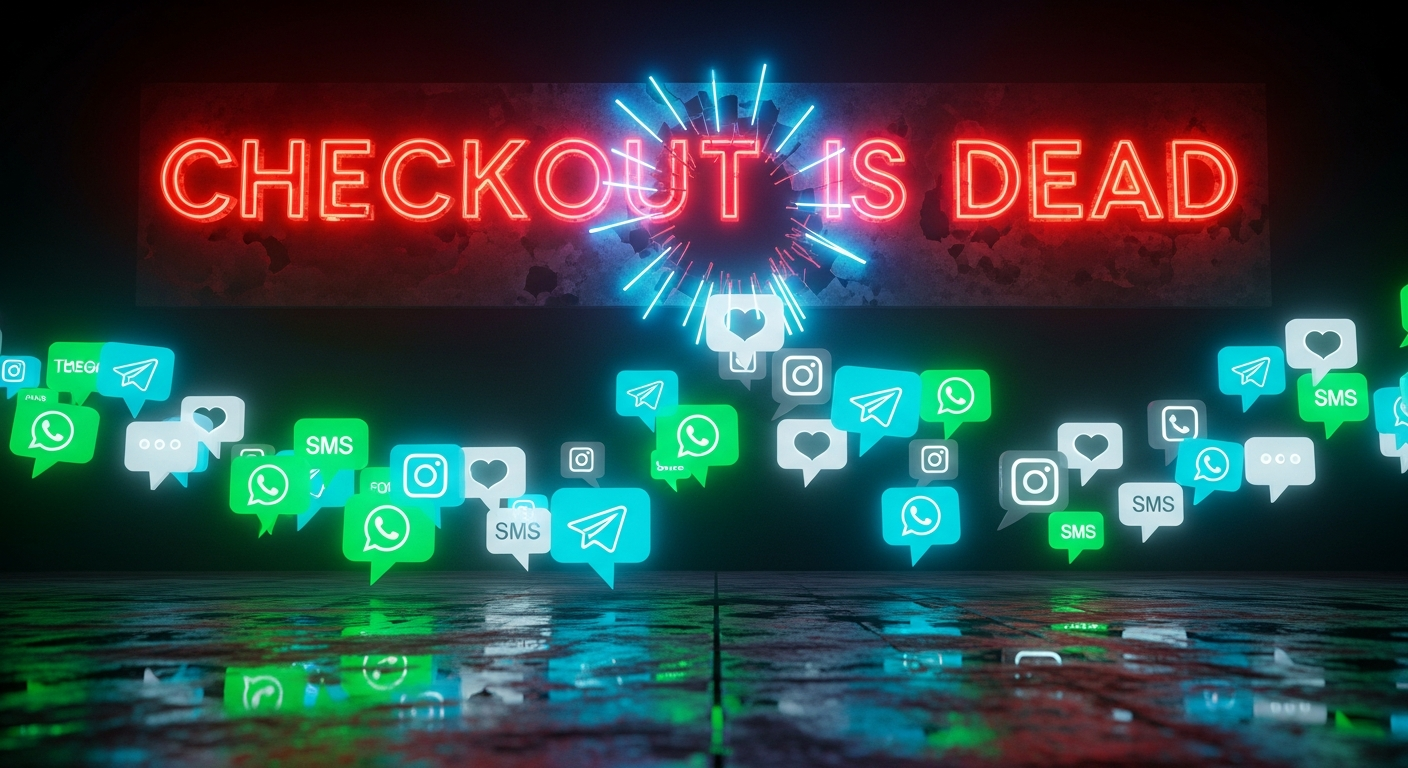
Your checkout page is becoming a digital graveyard. Every day, thousands of customers abandon cart, and the reason isn’t complexity anymore—it’s friction in a world that’s learned to expect frictionless conversation.
Chat commerce—buying directly through conversational interfaces like WhatsApp, Instagram DMs, SMS, and live chat—just crossed the tipping point. What started as a B2C gimmick in Southeast Asia is now the fastest-growing sales channel in North America, and your competitors are already three moves ahead.
If you’re still pushing customers toward a traditional checkout page, you’re literally working against human behavior.
Why Your Checkout Flow Is Suddenly Obsolete
Here’s what’s happened: The average customer now expects to interact with a brand the way they interact with friends—through chat. No forms. No progress bars. No “continue as guest” nonsense.
But you’re still sending them to a checkout page built for 2015.
This isn’t a theory. I’ve watched it kill conversion rates across SaaS, ecommerce, and D2C brands. Customers get to your checkout, see a 6-field form, and bounce to a competitor who let them complete the entire transaction in a Telegram conversation.
The Problem With Modern Checkouts
Traditional checkout flows treat the customer like a computer—asking for data in rigid, sequential steps. Name, email, address, payment. It’s efficient for processing, terrible for selling.
Chat commerce inverts this. The customer talks naturally. The backend picks up what it needs through context. “I need it by Friday” tells you shipping speed. “Something for my office” tells you use case. “Does it come in black?” tells you what matters to them.
Meanwhile, your checkout page is forcing them to select from a dropdown menu of addresses they’ve never entered before.
And here’s the brutal part: The brands winning in 2026 aren’t rushing customers through checkout. They’re slowing down the conversation and speeding up the sale.
What’s Changed in Customer Expectations
Two years ago, being able to buy through chat was a novelty. Now, it’s baseline. Customers expect it. When they don’t find it, they don’t think your brand is premium—they think it’s slow.
Look at what happened with livestream shopping in China. It’s a $200B market because customers don’t want to search for products. They want to ask someone, get a personalized recommendation, and complete the transaction in real time—all without leaving the stream.
That’s not coming to North America. It’s here. Brands like Sephora, Nordstrom, and Rivian are now piloting conversational commerce. And they’re not doing it as a side experiment—it’s their primary growth channel.
If those brands are betting their conversion metrics on chat commerce, your customers are already expecting it from you.
Why This Kills Traditional Ecommerce Checkout
Let me be direct: The traditional checkout funnel was designed when customers had to use your website. Now they have choices. And they’re choosing the path of least resistance.
The Cart Abandonment Crisis That Nobody’s Talking About
Official cart abandonment sits around 70% across ecommerce. But here’s the hidden stat: Customers are abandoning carts not because they don’t want the product—they want it, but they’re not going to fight through your checkout process to get it.
Install a chat button. Let them talk. Watch abandonment drop 25-40%.
Why? Because a human (or trained AI agent) can answer objections, clarify shipping, suggest alternatives, and build urgency—all in real time. Your checkout page can’t do any of that. It just sits there asking for billing addresses.
The Personalization Problem
Chat commerce feeds AI customer service agents real behavioral data. Someone says “I prefer overnight shipping” and the system learns that. Next time they check out, that’s the default. Next time they return, the agent remembers.
Traditional checkout? Cookie-based guessing and generic prompts.
Customers notice the difference. They feel seen in chat. They feel like a task number in checkout.
The Competitive Moat You’re Missing
Right now, chat commerce is a green field. Most brands haven’t implemented it. But that gap is closing fast. In 12 months, it won’t be a differentiator—it’ll be table stakes.
The brands implementing it now are building a customer relationship in real time. Not through email sequences or retargeting ads. Through actual conversation.
That’s a moat. That’s retention. That’s lifetime value you can’t get any other way.
The Mechanics: How Chat Commerce Actually Works (And What You Need To Know)
Chat commerce isn’t a single channel. It’s a philosophy: Meet the customer where they already talk, and let them buy without switching contexts.
1. WhatsApp Commerce (The Biggest Opportunity)
WhatsApp has 2 billion monthly users, and they just opened their platform to native commerce integrations. Customers message your business number, ask questions, see product catalogs directly in chat, and pay through WhatsApp Pay or Stripe.
Conversion rates? 15-25% higher than web checkouts, because there’s zero friction.
Implementation: Get a business WhatsApp account, plug in a commerce API (Shopify, Stripe, custom), and train your AI agent to handle product inquiries and orders. Done.
2. Instagram DM Shopping (The Retention Play)
Every time a customer DMs you on Instagram, that’s a sales conversation happening in a channel they already use daily. Most brands ignore it. Smart brands turn it into a checkout.
Enable Instagram Shop integration. Let customers browse directly in DMs. When they’re ready, they tap to buy and complete payment without ever leaving Instagram.
The magic: Every interaction is being watched by Instagram’s algorithm. Active, conversational accounts get better organic reach. You’re literally growing your audience while you sell.
3. SMS Commerce (The Underrated Channel)
Text message open rates sit at 98%. Email is 20-30%. Yet most brands still prioritize email for sales sequences.
SMS commerce sends personalized product links, one-click checkout pages, and order updates via text. Fast. Direct. High conversion.
The catch: You need warm traffic. Cold SMS is dead. But for repeat customers? SMS checkout links convert at 2x+ the rate of email.
4. Live Chat With AI (The Hybrid)
This is where it gets sophisticated. A customer lands on your website, chat opens, and an AI agent qualifies them in 30 seconds. If they’re ready to buy, the agent walks them through options and checkout in chat, never redirecting to a separate page.
If they have complex questions, the AI escalates to a human. But 70-80% of transactions complete without human touch—because the AI is trained on your products and selling logic.
This is the fastest-growing channel for SaaS right now, and it’s destroying traditional sales funnels.
5. Conversational Storefronts (The New Frontier)
Some brands are experimenting with building the entire shopping experience as a conversation. No separate product pages. You ask what the customer needs, the AI walks them through options, and at the end: “Ready to buy? $X. Should I send it to your billing address or somewhere else?”
Conversion rates are still being tracked (because this is nascent), but early data suggests 30-40% of people who engage complete a purchase. That’s insanely high for cold traffic.
The Playbook: How To Launch Chat Commerce Before It’s Too Late
Step 1: Audit Your Current Chat Footprint
Where are customers already messaging you? WhatsApp, Instagram DMs, Facebook Messenger, live chat on your website? Don’t start from zero—connect what you have.
Pull the last 100 messages in each channel. How many are sales-related? How many result in purchases? This tells you your chat commerce baseline.
Step 2: Start With Your Strongest Channel
Don’t try to implement chat commerce across six channels at once. Pick one: probably Instagram DMs if you have a visual product, WhatsApp if you’re B2B or have an international audience, or live chat if you have website traffic.
Nail it in that one channel. Master the flow. Build conversion metrics. Then expand.
Step 3: Build Your Chat Commerce AI Agent
This is non-negotiable. You can’t have a human answering chat 24/7, and you shouldn’t route every message to sales. Train an AI agent (using your product data, FAQ, pricing) to:
- Answer product questions
- Recommend based on customer use case
- Handle objection handling (price, shipping, fit)
- Execute the entire checkout in chat
- Know when to escalate to a human (complex requests, refunds, complaints)
Use platforms like Intercom, Drift, or Shopify Inbox that have built-in AI agents trained for this. Or plug your own GPT into your chat flow. But move fast—your competitors are already 6 months ahead.
Step 4: Connect Your Checkout to Chat
This is the technical part. Your chat interface needs to trigger a payment link (Stripe, PayPal, your processor) that the customer can complete without redirecting.
For WhatsApp: Use WhatsApp Pay or a payment link service. For Instagram: Use Stripe Direct Checkout. For live chat: Embed a payment form directly in the chat window.
Test the entire flow yourself. Pretend to be a customer. Message your brand, ask a question, buy something. If the experience takes more than 90 seconds from first message to completed order, you’ve got friction to remove.
Step 5: Measure the Right Metrics
Forget traditional ecommerce metrics. Chat commerce success is measured differently:
- Chat-to-conversion rate (% of chats that result in a purchase)
- Average order value in chat (vs. web checkout)
- Customer satisfaction score (does chat feel better than checkout?)
- Repeat purchase rate via chat (returning customers using the channel)
- Time-to-purchase (how fast from first message to payment)
Your goal: Chat-to-conversion should be 15-25%. If you’re below 10%, you’ve got a messaging or flow problem.
Step 6: Iterate Based on Conversations
Chat generates gold-mine data. Every objection raised, every product comparison asked for, every “do you have this in black?” tells you something about customer intent.
Use that data to improve your product recommendations, pricing, and positioning. You’re not just building a sales channel—you’re building direct customer insight that informs everything.
The Hard Truth: This Isn’t Optional
I know you have a checkout flow. You’ve optimized it. Maybe you’ve A/B tested it. Maybe it converts at 3-4%, which is decent.
But it doesn’t matter anymore. Not because checkout flows are bad—they’re fine. They matter because they’re not how humans want to buy anymore.
In 2026, customers expect frictionless conversation. If you’re not meeting them there, you’re leaving money on the table. Simple as that.
The brands launching chat commerce now aren’t doing it to be trendy. They’re doing it because it works. 25-40% reduction in cart abandonment. Higher AOV. Better customer data. Faster time-to-repeat-purchase.
In 12 months, this won’t be a competitive advantage. It’ll be baseline. And by then, your competitors will have a 12-month head start on customer relationships, data, and retention.
Start now. Pick one channel. Build the flow. Let your customers talk their way to a purchase. That’s the future.
Everything else is noise.
Ready to implement chat commerce but unsure where to start? This is exactly the kind of strategy shift I work through with every founder and marketing leader I engage with. If you’re serious about capturing this window before it closes, book a consultation with me directly at EdwardRippen.com. We’ll audit your current conversion flow, identify your best chat channel, and map out a 90-day implementation plan.
Everything I’ve covered here goes 10x deeper in The Golden Goose Formula—my viral growth and conversion optimization playbook. This is exactly the kind of customer experience innovation that separates fast-growing brands from everyone else. Grab your copy at EdwardRippen.com and learn the full system.